what is the default signal sent to processes by the kill utility
This browser is no longer supported.
Upgrade to Microsoft Edge to take advantage of the latest features, security updates, and technical support.
The Windows container platform is expanding! Docker was the first piece of the container journey, now we are building other container platform tools.
- containerd/cri - new in Windows Server 2019/Windows 10 1809.
- runhcs - a Windows container host counterpart to runc.
- hcs - the Host Compute Service + handy shims to make it easier to use.
- hcsshim
- dotnet-computevirtualization
This commodity will talk about the Windows and Linux container platform as well as each container platform tool.
Windows and Linux container platform
In Linux environments, container management tools similar Docker are built on a more granular set of container tools: runc and containerd.
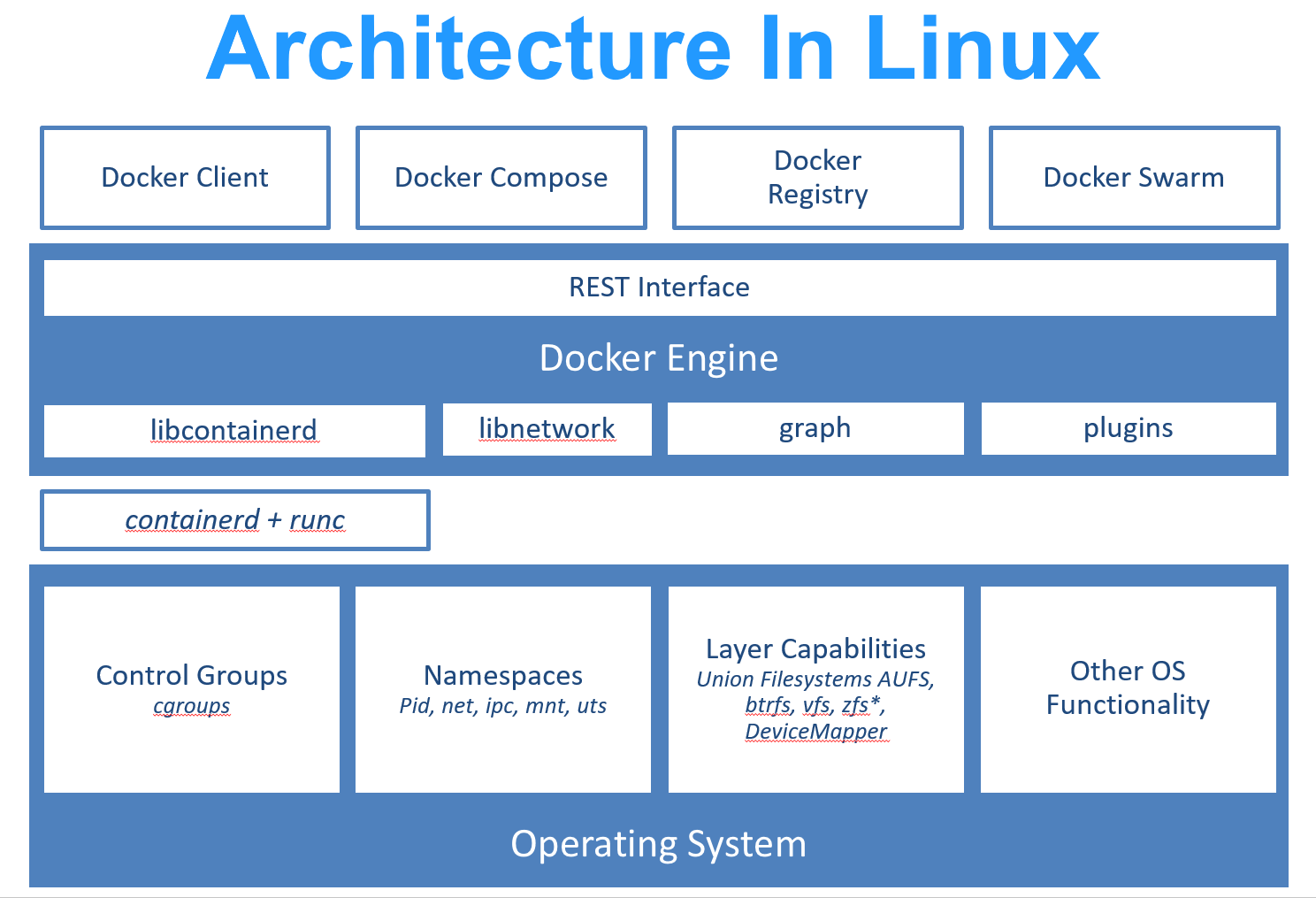
runc is a Linux command-line tool for creating and running containers co-ordinate to the OCI container runtime specification.
containerd is a daemon that manages container life cycle from downloading and unpacking the container prototype to container execution and supervision.
On Windows, we took a different arroyo. When nosotros started working with Docker to support Windows containers, we built directly on the HCS (Host Compute Service). This weblog post is full of information virtually why we congenital the HCS and why nosotros took this approach to containers initially.

At this point, Docker yet calls directly into the HCS. Going forward, however, container management tools expanding to include Windows containers and the Windows container host could call into containerd and runhcs the way they call on containerd and runc on Linux.
runhcs
runhcs is a fork of runc. Like runc, runhcs is a command line client for running applications packaged according to the Open Container Initiative (OCI) format and is a compliant implementation of the Open up Container Initiative specification.
Functional differences betwixt runc and runhcs include:
-
runhcsruns on Windows. Information technology communicates with the HCS to create and manage containers. -
runhcstin can run a variety of unlike container types.- Windows and Linux Hyper-V isolation
- Windows procedure containers (container paradigm must match the container host)
Usage:
runhcs run [ -b packet ] <container-id> <container-id> is your name for the container example yous are starting. The name must exist unique on your container host.
The package directory (using -b bundle) is optional. As with runc, containers are configured using bundles. A container's bundle is the directory with the container's OCI specification file, "config.json". The default value for "bundle" is the current directory.
The OCI spec file, "config.json", has to have 2 fields to run correctly:
- A path to the container's scratch space
- A path to the container's layer directory
Container commands bachelor in runhcs include:
-
Tools to create and run a container
- run creates and runs a container
- create create a container
-
Tools to manage processes running in a container:
- start executes the user defined process in a created container
- exec runs a new process inside the container
- suspension pause suspends all processes inside the container
- resume resumes all processes that have been previously paused
- ps ps displays the processes running inside a container
-
Tools to manage a container's state
- state outputs the country of a container
- impale sends the specified bespeak (default: SIGTERM) to the container'south init process
- delete deletes whatever resources held by the container often used with detached container
The only command that could be considered multi-container is listing. It lists running or paused containers started by runhcs with the given root.
HCS
We have two wrappers bachelor on GitHub to interface with the HCS. Since the HCS is a C API, wrappers make it like shooting fish in a barrel to call the HCS from higher level languages.
- hcsshim - HCSShim is written in Go and it'south the ground for runhcs. Take hold of the latest from AppVeyor or build information technology yourself.
- dotnet-computevirtualization - dotnet-computevirtualization is a C# wrapper for the HCS.
If you want to utilise the HCS (either directly or via a wrapper), or you lot want to brand a Rust/Haskell/InsertYourLanguage wrapper around the HCS, please leave a annotate.
For a deeper look at the HCS, lookout man John Stark'south DockerCon presentation.
containerd/cri
Of import
CRI back up is just available in Server 2019/Windows ten 1809 and later.
While OCI specs defines a unmarried container, CRI (container runtime interface) describes containers as workload(due south) in a shared sandbox environment called a pod. Pods can comprise one or more than container workloads. Pods permit container orchestrators similar Kubernetes and Service Cloth Mesh handle grouped workloads that should be on the same host with some shared resource such as retentiveness and vNETs.
containerd/cri enables the following compatibility matrix for pods:
| Host Bone | Container OS | Isolation | Pod Back up? |
|---|---|---|---|
| Linux | hyperv | Yep—Supports truthful multi-container pods. |
| Windows Server 2019/1809 | procedure* or hyperv | Yes—Supports truthful multi-container pods if each workload container OS matches the utility VM Os. | |
| Windows Server 2016, Windows Server 1709, Windows Server 1803 | hyperv | Partial—Supports pod sandboxes that can support a single procedure-isolated container per utility VM if the Container OS matches the utility VM Bone. |
*Windows 10 hosts just support Hyper-5 isolation
Links to the CRI spec:
- RunPodSandbox - Pod Spec
- CreateContainer - Workload Spec
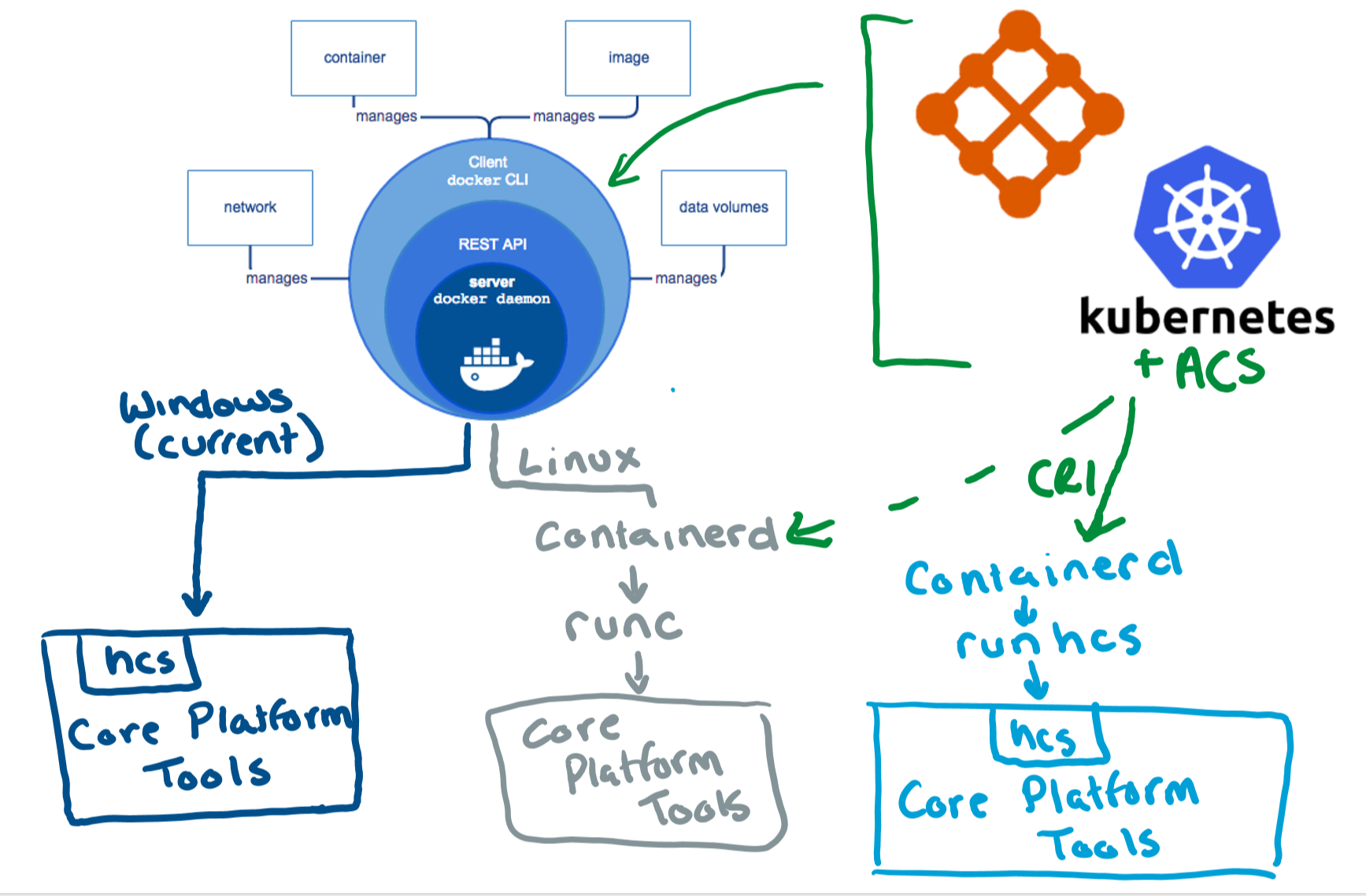
While runHCS and containerd both can manage on any Windows organisation Server 2016 or afterward, supporting Pods (groups of containers) required breaking changes to container tools in Windows. CRI support is available on Windows Server 2019/Windows 10 1809 and afterward.
Feedback
Submit and view feedback for
Source: https://docs.microsoft.com/en-us/virtualization/windowscontainers/deploy-containers/containerd
0 Response to "what is the default signal sent to processes by the kill utility"
Post a Comment